What It's Like Attending SCOTUS Arguments in 2026
By Manny Marotta
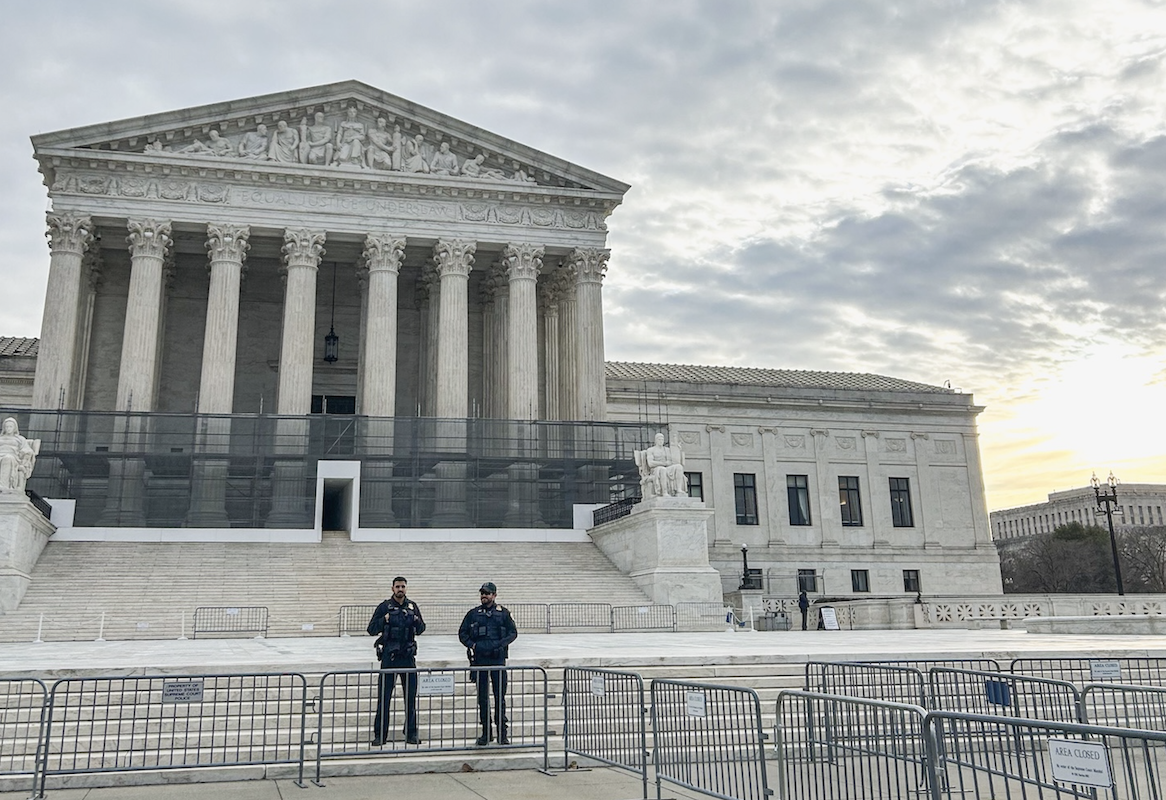 On Jan. 14, I had the opportunity to attend Supreme Court oral arguments in Galette v. New Jersey Transit Corporation, a case on whether N.J. Transit counts as an arm of the state for the purposes of determining sovereign immunity.
It was my first time attending SCOTUS oral arguments, and the experience taught me a lot about how the Court operates in 2026.
I was able to attend the arguments due to the Supreme Court’s lottery ticketing system, which debuted at the beginning of last year. Through this system, any member of the public can apply to attend oral arguments on a future argument day (which are easy to find on the Court’s website), bypassing the public line. It functions as a fast-pass for SCOTUS.
On Dec. 20, I applied to five oral arguments in the January sitting. I was rejected from two, accepted to two (I told SCOTUS I’d skip this case) and waitlisted for one. The system communicates with users by email, and it’s easy to navigate. Applicants are informed of acceptance or rejection approximately three weeks before argument day.
On the appointed day, I arrived a little over an hour before arguments began, bypassed the public line that had formed along East Capitol Street (comprising only 18 people at 8:45 a.m.) and was directed by a member of the Supreme Court Police standing on the front plaza to a security checkpoint that sits just inside the building and is similar to airport security.
After the checkpoint, I gave my name to a guard holding a list of the names of lottery winners on it, and after it was checked off, I was given a paper wristband to wear that said “SCUS” on it.
After 45 minutes of waiting around on the ground floor, I and the other lottery winners — mostly families, about half from New Jersey given the case’s subject matter, and a few Capitol Hill interns — were instructed to check our phones and jackets in the lockers. After this, we were escorted upstairs to a second security checkpoint, then we entered the magnificent courtroom, decorated with friezes depicting historical legal figures like Hammurabi, Moses and Cicero. We were seated in comfortable pews (the room was about one-third empty), and after further instructions about decorum in the courtroom and a stern warning against protesting from a member of the Marshals office, the justices filed in and took their seats.
 Oral arguments are scheduled for one hour, but this session lasted roughly 100 minutes. This was also an opinion day, so before arguments the Court issued opinions for Barrett v. United States; Case v. Montana; and Bost v. Illinois State Board of Elections. Justice Jackson read the opinion in Barrett; Justice Kagan read the opinion in Case; and Chief Justice Roberts read the opinion in Bost.
Many in the courtroom had been hoping for the opinion in the tariffs case, but the Court did not issue it, so we will have to wait a little longer.
As for conduct in the courtroom, the justices took turns questioning the attorneys, a COVID-era innovation. I was pleasantly surprised by Justice Thomas’s loquacity considering that there was an entire 10-year period during which he asked no questions from the bench. Justice Alito, on the other hand, appeared to fall asleep during the arguments, first cradling his head in his hand and then laying back in his chair and facing the ceiling with his eyes closed. Justices Kavanaugh and Barrett appeared tentative in their questioning, and Justice Jackson spoke the most. All the justices were sipping from thermoses.
The session ended without much pomp, and we filtered back to the ground-floor locker room. Many attendees then explored the extensive exhibits on the ground floor, which contains stories and artifacts from numerous justices and landmark cases throughout history. For example, there’s an entire exhibit devoted to Brown v. Board of Education and large displays honoring Sandra Day O’Connor and Ruth Bader Ginsburg. There’s also a gift shop, whose book section features the growing number of books authored by the justices.
Overall, although the lottery system is merely a year old, it runs quite smoothly and grants any American the opportunity to see SCOTUS arguments without having to wait in line and gamble over whether they can gain admittance. I hope that the Court also finds this system worthwhile and continues employing it well into the future.