Fix the Court Calls on SCOTUS to Issue New Recusal Policy in Light of Copyright Petition That Lacked a Quorum
FTC’s Gabe Roth sent this letter to the Supreme Court on Oct. 20:
Good afternoon,
After four recusals yesterday in 25-1391, BMG v. Vetter, it’s now clear that the Court is in need of a policy change to ensure that major copyright cases — and other cases involving the justices’ book publishers, their parent companies and their subsidiaries — aren’t exempt from review.
In our age of media consolidation, with seven justices having written books and at least six still earning money from them, this phenomenon will only escalate over time. The current recusal policy — and I know I advocated for it for years, so I’m eating a bit of crow here — simultaneously grants these publishers immunity if they win below while ensuring they have no opportunity for a cert. grant if they lose. Trying to carve out a “duty to sit” exception in future cases that are similar to BMG, without establishing a clear new policy that the public knows about, will more likely than not be unsatisfactory.
Today, I’m proposing a couple of ways to mitigate these circumstances and ensure the justices can hear these types of cases in the future, regardless of their book-writing. I hope you consider them.
Option 1: Any money a justice earns from book advances and royalties must be deposited into a separate bank account or TSP-like retirement or savings account, which the justice may not access until he or she retires from regular active service.
Option 1 recusal policy: A justice may participate in cases and petitions involving their book publisher two years after the advance is deposited (cf., other two-year cooling-off periods at the Court, like former clerks not working on SCOTUS petitions for two years post-clerkship). Even if royalties are periodically deposited into the separate account during a justice’s tenure, he or she may hear the publisher’s cases and petitions. (I don’t see this conflicting with 28 U.S.C. 455(c) or Canon 3(B)(5) for several reasons.)
Option 2: A justice may only access his or her advances (royalties would be deposited as in Option 1), and those funds may only be used for one or a combination of three things: (a) to pay for their primary residence, whether a current mortgage or a new house; (b) to pay for their children’s education expenses; and/or (c) to pay for emergency expenses, e.g., if a sibling or child is diagnosed with a serious illness, with the emergency being certified by the Chief Justice.
Option 2 recusal policy: When a justice accesses the money described in Option 2, a two-year clock starts, during which that justice may not participate in a case or petition involving their publisher.
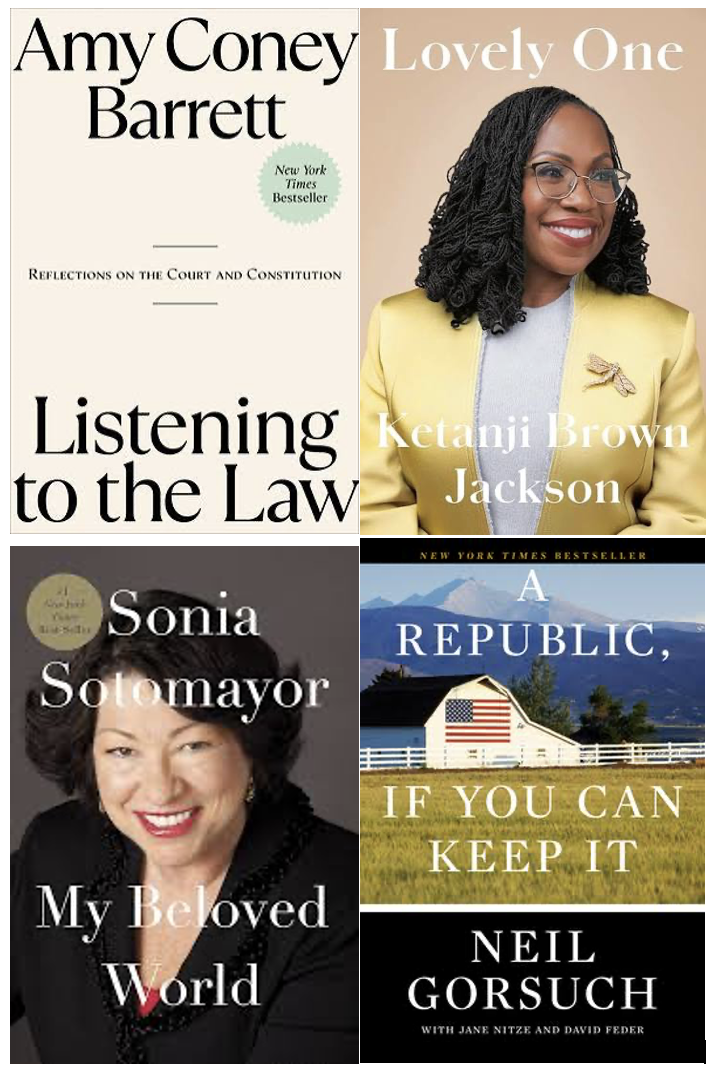 I realize the difficulty of getting all nine justices to agree on a new recusal policy, so a statement signed by seven of the nine (or six, since Justice Thomas hasn’t reported earning any money from My Grandfather’s Son since 2008) would be understandable (cf., seven justices’ Nov. 1, 1993, Statement of Recusal Policy). Critically, I do not believe legislation is needed to implement any of the above proposals.
Since the justices’ secondary jobs as authors must not interfere with their ability to perform their primary jobs, I hope they don’t wait until the next petition involving their book publishers is filed to act. […]
This can be an easy win, and I hope you take it.
Best,
Gabe