Supreme Court Weighs State Power and Climate Claims in Suncor
By Cortez Collins, FTC law clerk
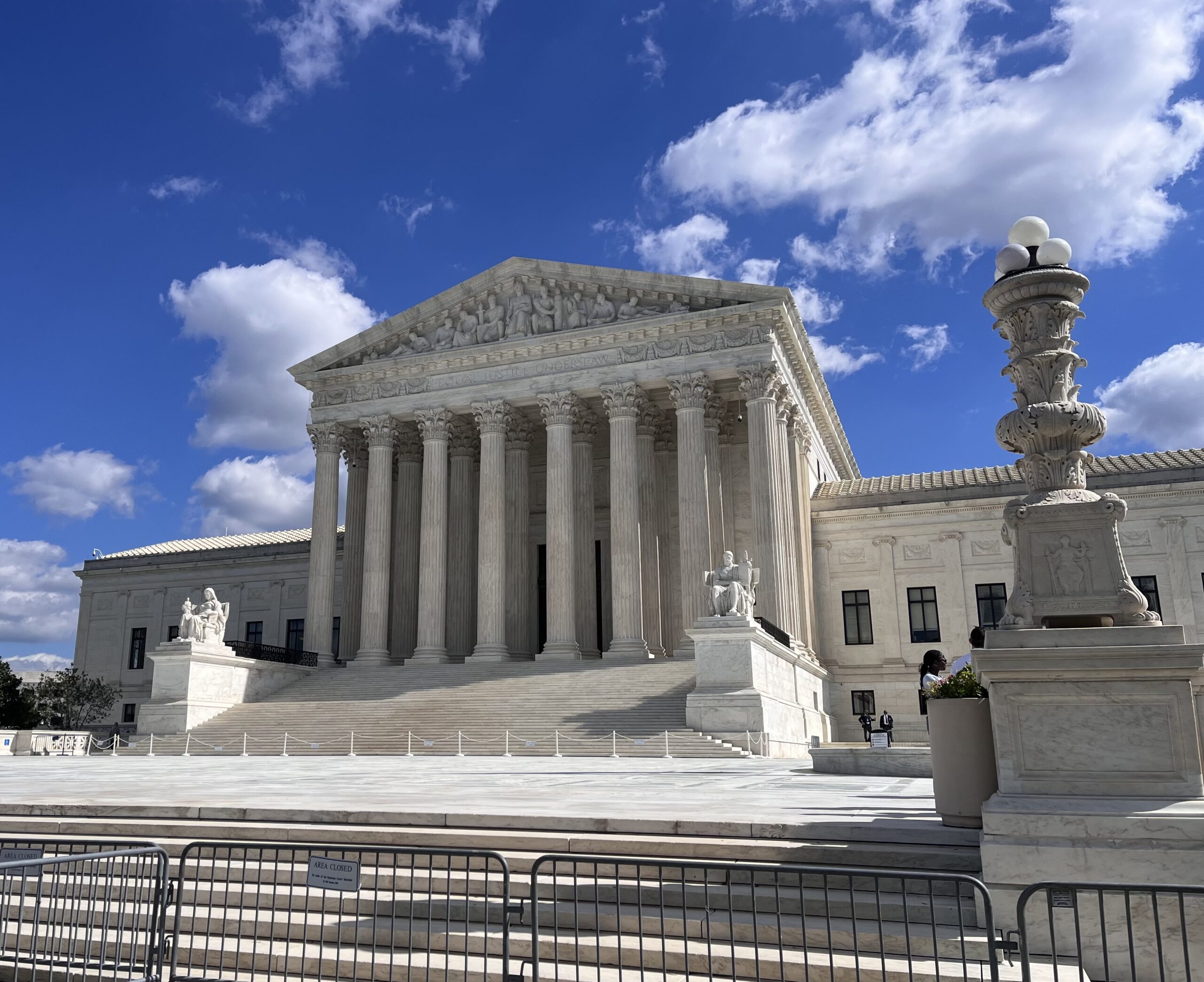 The Supreme Court opened its new term Monday with a case that could reshape the relationship between state tort law and federal environmental regulation.
In Suncor Energy (U.S.A.) Inc. v. County Commissioners of Boulder County, the justices considered whether federal law prevents Colorado local governments from pursuing state-law claims against fossil-fuel companies for alleged climate-related harms.
At the center of the argument was a fundamental federalism question: When does a state’s attempt to remedy harm within its borders become unconstitutional regulation of conduct outside them?
Representing Suncor and the other petitioners, Kannon Shanmugam argued that Boulder’s lawsuit crosses that line. According to the companies, Colorado is attempting to impose liability based on global fossil-fuel activity, greenhouse-gas emissions and climate change.
Shanmugam argued that the Constitution’s prohibition against extraterritorial regulation prevents a state from extending its law beyond its borders merely because effects are felt within the state. He also argued that interstate air pollution has traditionally been governed by federal law and that the Clean Air Act preempts attempts by individual states to regulate emissions originating elsewhere.
Boulder’s attorney, Kevin Russell, offered a different characterization.
Russell argued that states have long provided tort remedies for injuries occurring within their borders even when the conduct producing those injuries occurred elsewhere. The fact that conduct crosses state lines, he argued, does not automatically transform a traditional tort claim into unconstitutional extraterritorial regulation.
That distinction became particularly clear during questioning from Justice Barrett.
Barrett asked whether Colorado could enact a law directly capping emissions in the other 49 states. Russell conceded that it could not. But he distinguished such direct regulation from a tort action seeking compensation for injuries suffered within Colorado.
A tort judgment does not necessarily prohibit the underlying out-of-state conduct. Instead, it can require a defendant to bear some of the costs associated with harm allegedly caused inside the state.
That distinction could have consequences well beyond climate litigation. States routinely apply tort law when conduct originating elsewhere allegedly causes injuries to their residents. A broad constitutional rule against claims involving significant out-of-state conduct could therefore affect areas of law far removed from environmental disputes.
The argument against preemption
The justices also wrestled with whether federal environmental law leaves room for Boulder’s claims at all. Russell argued that Suncor’s position effectively asks the Court to derive preemption from the structure of the Constitution rather than from an act of Congress. Under Boulder’s theory, state law continues to operate unless the Constitution or federal statutes displace it. Boulder also emphasized that its lawsuit is not simply an attempt to regulate emissions.
Russell added that a state ordering companies to reduce emissions outside its borders looks like regulation, but a state allowing plaintiffs to seek damages for injuries allegedly caused by deceptive conduct presents a different question. The practical effect of a judgment may influence corporate behavior elsewhere, but that alone does not necessarily make the judgment extraterritorial regulation.
A larger question about state power
The argument ultimately exposed competing visions of environmental federalism. Suncor maintains that climate change is inherently interstate and international and therefore requires uniform federal rules. Allowing state and local governments to impose liability based on global emissions, the companies argue, could allow local courts to influence national energy and environmental policy.
Boulder responds that the nationwide scope of an industry or environmental problem does not eliminate traditional state authority to remedy local injuries. The Court must therefore decide where regulation ends and compensation begins. If Boulder prevails, that will not necessarily mean the fossil-fuel companies are liable. Questions of causation and the merits of the alleged deception would remain for further litigation. Instead, it would mean those questions are not categorically displaced simply because the alleged injuries relate to global climate change.
The broader principle could prove more consequential than the immediate climate dispute: a nationwide problem does not necessarily transform every state-law remedy for a local injury into nationwide regulation.