Fix the Court Leads Two Dozen Groups in Calling for a Supreme Court Records Act
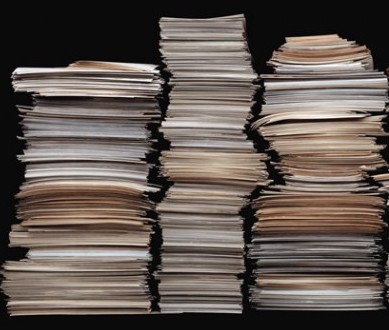 Below and at this link is a letter from 23 good-government organizations advocating that Congress pass a law to make Supreme Court justices’ papers government property and require that a segregable portion of them become available for public inspection 12-15 years after a justice’s retirement, much as the Presidential Records Act did for presidential papers.
We’d call it the Supreme Court Records Act. More below:
Sen. Chuck Grassley, Chairman, Senate Judiciary Committee
Sen. Dick Durbin, Ranking Member, Senate Judiciary Committee
224 Dirksen Senate Office Building
Washington, D.C., 20510
Rep. Jim Jordan, Chairman, House Judiciary Committee
Rep. Jamie Raskin, Ranking Member, House Judiciary Committee
2138 Rayburn House Office Building
Washington, D.C., 20515
Dear Chairmen Grassley and Jordan and Ranking Members Durbin and Raskin:
The working papers of Supreme Court justices have long been claimed as the personal property of each justice to destroy or disseminate as they see fit.[1] Yet no external authority has granted them private ownership of these papers. In fact, the government owns almost all other papers produced by its employees while carrying out their official duties — except for those produced by judges and their staff. [2]
Congress should correct this anomaly by restoring ownership over the justices’ papers to the public and directing the Court to create a uniform set of rules to regulate how and when these papers become publicly available.[3] The rules should balance the public interest in transparency and the academic value of these papers with the justices’ interest in candid deliberation by maintaining a certain degree of confidentiality over their internal communications.
Unlike the executive branch, which is required to preserve and make a public record of its inner workings, no laws determine what the justices must preserve or share. During a time when the justices’ work increasingly affects us all, it is reasonable to enact legislation to ensure their papers eventually belong to the people.[4]
Justices have varying approaches to managing their papers, which include communications with fellow justices about pending cases and materials drafted by law clerks such as draft opinions. These records can reveal the formation and dissolution of voting coalitions, reasoning behind surprising votes, tactics used to influence each other and interpersonal dynamics.
For example, Justices Anthony Kennedy and Stephen Breyer have yet to make any announcements regarding the plans for their papers. Justice Sandra Day O’Connor restricted access to her papers until all justices who served with her have retired. Justice David Souter’s papers are sealed until 50 years after his death (2075). Justices Antonin Scalia’s and Ruth Bader Ginsburg’s papers for specific cases or terms will remain closed until all other justices who participated in them have died. Justice Thurgood Marshall, on the other hand, allowed his papers to be made available to the public shortly after his death.
Conversely, the executive branch has a uniform system for handling its papers. The Presidential Records Act of 1978 requires the preservation of all White House records, which are made public after the president leaves office and the completion of archival processing (i.e., no more than 12 years for sensitive documents). The Federal Records Act governs retention of agency documents, which are also subject to FOIA.
No equivalent mechanism exists for the judiciary, despite a post-Watergate congressional committee recommendation to convert judicial papers to public property and set a uniform timeline for their release no more than 15 years after a justice retires.[5] The justices’ papers, like presidential papers, are created by government officers acting in furtherance of their official duties by using government resources, staff and facilities. They should therefore be treated as public property.
We recognize that the justices’ ability to deliberate in good faith and change their positions without additional public scrutiny is important to the Court’s effectiveness. However, too much secrecy is also problematic. Given their life tenure and immense power, justices should accept that their deliberations will eventually be scrutinized. This is especially true given the Roberts Court’s increasing tendency to resolve major legal questions via unsigned, unexplained emergency orders on the shadow docket.[6] Eventual access to internal working papers from these cases might be the only way for the public to understand how the justices reached a consensus.
Critics may argue that creating a uniform system for public release will have a chilling effect on the amount and quality of the justices’ papers. However, critics of the PRA similarly worried that the law would incentivize high-ranking executive officials not to keep records. Despite this concern, memoirs and recollections of presidential aides have grown so much over time that the Library of Congress now has a dedicated staff to cover these records.[7] Regardless, the justices’ views about record release timelines should indeed be considered, as their willingness to cooperate with any regulations would help ensure a continual rich trove of working papers.
For the foregoing reasons, we propose that Congress pass legislation declaring the justices’ papers to be public property and directing the Court to promulgate its own rules, subject to congressional approval, to govern the specific timelines of reasonable public access to their papers.
Sincerely,
American Governance Institute
American Society of Magazine Editors
Brechner Freedom of Information Project
Citizens for Responsibility and Ethics in Washington (CREW)
Court Accountability Action
Data Coalition, a Data Foundation community
Demand Progress
Fix the Court
Freedom of the Press Foundation
Free Government Information
Free Law Project
Government Information Watch
GovTrack.us
Legal Accountability Project
National Newspaper Association
National Press Photographers Association
Project On Government Oversight
Public Knowledge
Radio Television Digital News Association
Reporters Committee for Freedom of the Press
Society of American Archivists
Society of Professional Journalists
Tully Center for Free Speech
———————————-
[1] Jodi Kantor, “How the Supreme Court Locks Away Its Own History,” New York Times, Sept. 1, 2026 (link).
[2] Steve Vladeck, The Justices’ Papers (Sept. 7, 2026) (link); see generally Susan David deMaine, Access to the Justices’ Papers: A Better Balance, 110 Law Library Journal 185 (2018) (link).
[3] Kathryn A. Watts, Judges and Their Papers, 88 N.Y.U. L. Rev. 1665 (2013) (proposing this solution to shift to a public ownership model for judicial papers) (link).
[4] Lauren Harper, “SCOTUS Secrecy is Reaching a Crisis Point,” Freedom of the Press Foundation, Sept. 6, 2026 (link).
[5] Supra note 1.
[6] Supra note 4.
[7] Supra note 3.