Can We Only Get Justice From an Overflow Room?
By Manny Marotta
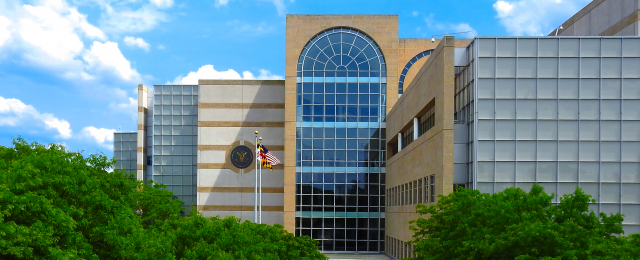 We read a federal court order this week that stunned us — not because the judge rejected our request to livestream a hearing, but because of how firmly it clung to a vision of public access that feels stuck in another century.
Fix the Court routinely asks federal courts to provide remote livestreams of proceedings of nationwide interest. Most courts either respond favorably and provide a call-in number or remote video link, or they quietly ignore our request. But in this case, Kilmar Abrego-Garcia v. Noem (25-951), the District of Maryland said no through an elaborate order that appears to be overly defensive of her court’s lack of transparency. (This was in response to a motion to intervene in the case we filed last May in which FTC was represented by nonprofit Public Justice.)
In her order, Judge Xinis acknowledged a fundamental truth: the public has a right to observe court proceedings, and transparency promotes trust and accountability. But then, Xinis says that that right is fully satisfied because people can attend hearings in person, watch from overflow rooms inside the courthouse or, in some instances, view a live feed reserved for credentialed media.
In other words, access is “open” so long as you can physically get to the building, pass through security and sit in a designated room, or otherwise credential yourself as “registered media” to view a restricted live feed.
Judge Xinis’s logic ignores the realities of modernity. Most Americans cannot take time off work and travel long distances just to observe a hearing, even for a case of national importance taking place in D. Maryland (Greenbelt courthouse pictured above). In a post-COVID world, most Americans rely on digital tools to engage with public institutions. Telling the public that transparency exists only inside a courthouse is like saying democracy is open but only during business hours, and only if you can afford the trip.
Judge Xinis also raised fears about “unauthorized recording” and technical disruptions, suggesting that remote livestreams pose unique security faults. Yet federal courts have already livestreamed proceedings in high-profile cases and appellate arguments across the country for several years with no such collapse of order.
The technology exists. The precedent exists. What’s missing is the will, and instead of doing more research into the benefits of livestreaming, Judge Xinis conjures excuses for why we shouldn’t have it at all.
What struck me most was the court’s conclusion that because no one had proven they were denied access, expanded access was unnecessary. That flips transparency on its head. The courthouse doors are open, but can the public interested in the case realistically walk through them?
Judge Xinis’s order treats livestreaming as a luxury not as a public utility. In an era when congressional hearings, city council meetings and many federal court cases are broadcast live online, insisting that justice must be witnessed only from inside a federal building is an antiquated, concerning and deeply anti-transparent stance.
Justice must not only be done; it must also be seen. In 2026, “seen” should mean more than a folding chair in an overflow room. It should mean anywhere the public can access our legal system.